



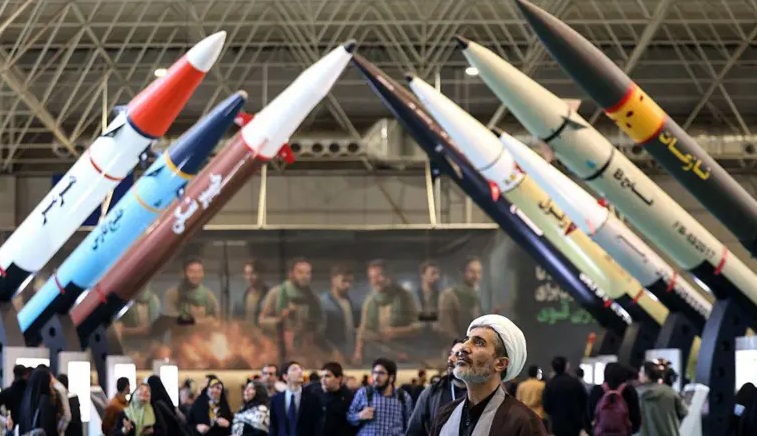
Nearly five and a half months after the outbreak of the U.S.-Israeli war with Iran, the conflict has entered a very different phase.
The opening weeks were defined by heavy airstrikes, missile barrages and attacks on military and nuclear facilities. Now, the battlefield increasingly resembles a war of attrition, with lower-intensity missile launches, drone attacks and continued pressure around the Strait of Hormuz.
That raises a much bigger question: How long can Iran realistically keep fighting?
The answer may have less to do with how many missiles Iran has left than with how much pressure its military, economy and political system can absorb.
Iran's missile attacks are no longer as large or frequent as they were at the beginning of the war. But that does not necessarily mean its military capacity has been exhausted. Iran has spent decades building underground facilities, mobile launch systems and dispersed production networks designed to survive precisely this kind of attack.
Drones and lower-cost missiles also give Tehran another advantage. Iran does not need to match the United States and Israel weapon for weapon. It only needs to keep forcing its opponents to spend significantly more on interception, intelligence and military deployment than it spends on each individual attack.
The Strait of Hormuz is another major source of leverage. Even limited disruption to shipping can create pressure far beyond the battlefield, affecting energy markets, insurance costs and global trade.
But Iran is paying a heavy price as well.
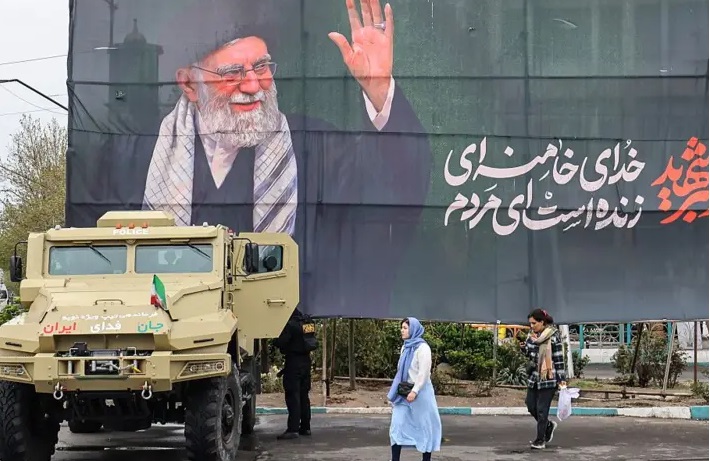
The longer the war continues, the greater the pressure on an economy already weakened by sanctions and years of structural problems. Inflation, shortages, disrupted trade and falling household purchasing power could eventually become a greater threat to Tehran than the battlefield itself.
That is why Iran's strategy increasingly appears to be based on endurance rather than decisive victory.
If the government can maintain domestic control, keep its military-industrial system functioning and continue limited attacks, Tehran may be able to prolong the conflict considerably. But the same logic applies to Washington and Jerusalem: the longer the war lasts, the higher the financial, military and political costs become.
Five months into the conflict, neither side appears to have an easy path to a clean victory.
For Iran, simply surviving may be enough to claim a strategic success. For the United States and Israel, the challenge is increasingly becoming how to end the war without paying an even higher price.
In the end, the decisive question may not be who has more missiles left.
It may be who loses the will — or the ability — to keep paying for the war first.
For more international news and current-affairs coverage, follow Huading Network (花叮网).